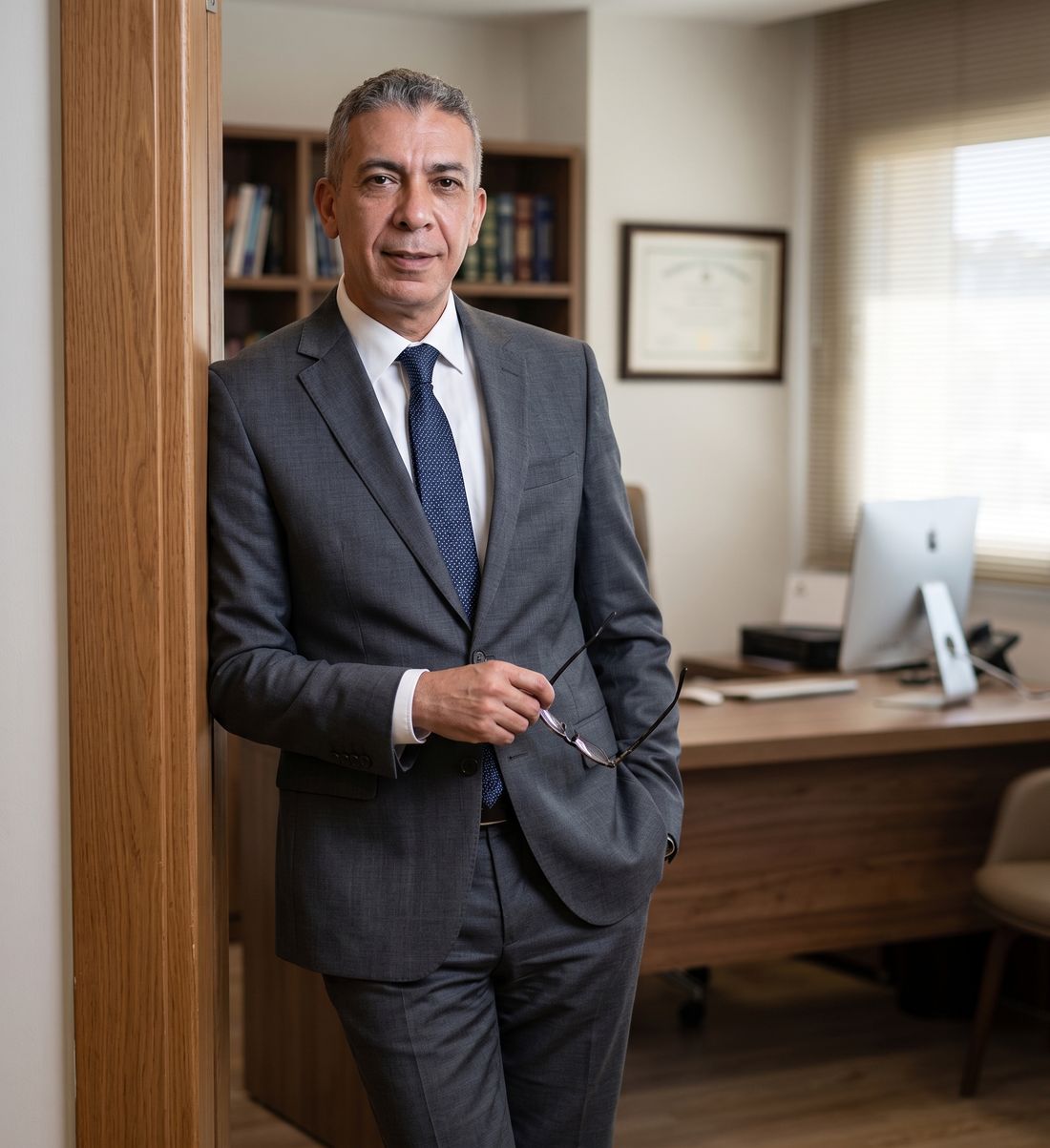
Dr. Diaa Al-Awadi: from intensive care to a food list a million people followed.
Dr. Diaa Al-Awadi was an intensive-care physician. He taught
more than a million people to eat differently. Then Egypt erased his record.
Illustration of Dr. Diaa Al-Awadi
The whole story in 60 seconds
An intensive-care doctor noticed the same patients kept arriving, and traced it back to food.
He built a food system: foods to eat, foods to leave, six rules and a fasting rhythm.
More than a million people followed it, across Egypt, the Levant, the Gulf and North Africa.
In March 2026 the Egyptian Medical Syndicate struck him off. Six weeks later he was found dead in Dubai.
On 3 May 2026, Egypt ordered everything he had published removed from the internet.
Most of what he was treating had been cooked, canned, fried and sweetened long before it was
ever diagnosed.
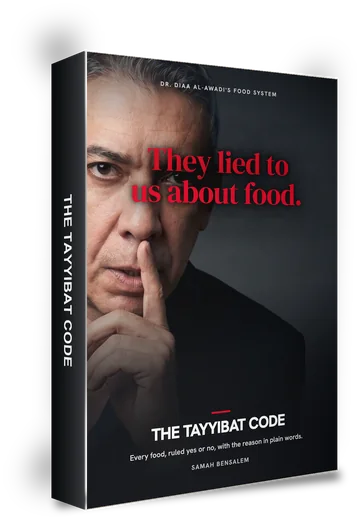
From the book, on what he saw in intensive care
Timeline
Timeline: from famous to struck off in fourteen months.
BeforeTrains at Ain Shams University, Cairo. Graduates with honours and becomes a consultant anaesthesiologist and intensive-care physician.
The workBuilds the Tayyibat system, "the wholesome things": foods to eat, foods to leave, six rules and a fasting rhythm.
The reachMore than a million followers across Egypt,
Syria, Iraq, Jordan, the Gulf, Algeria, Tunisia and Morocco.
March 2026Struck off the medical register by the Egyptian
Medical Syndicate.
April 2026Found dead in a hotel room in Dubai, aged 47, six weeks after losing his licence.
30 April 2026Exhumed and re-examined at his family's
request, after his widow went to a public prosecutor.
3 May 2026His record is ordered off the internet by
Egypt's Supreme Council for Media Regulation.
His story
His story in seven short chapters.
Chapter 1 · 2 min
The same patients kept coming back to intensive care.
He was not a diet guru. Anaesthesia and intensive care do not tolerate guessing. Standing at the end of
the bed at three in the morning, he saw the same people keep arriving. Not accidents, not infections, but
bodies taken apart slowly, over decades, by something that happened long before the ambulance was called.
Chapter 2 · 3 min
He decided the body could repair itself, given the right food.
His conclusion was simple, which is why it was unwelcome: most of what he treated had been cooked,
canned, fried and sweetened long before it was diagnosed. And a body given what it was built for has far
more capacity to repair itself. So he stopped waiting at the end of the road and walked to the start of it.
"A body given what it was built for has far more capacity to repair itself than
anybody had told him."From the book
Chapter 3 · 3 min
He built a list, and it made people furious.
He called it Tayyibat (الطيِّبات), "the wholesome things." He named 89 foods to build a
life on and 82 to leave alone, with six rules and a fasting rhythm. Many of the foods he ruled out
were ones most people consider healthy. The food list on this site extends his rulings to 575 foods, and marks
which ones are his own.
More than a million people followed his food list.
Not following the way people follow an account and forget it, but following the way that changes a shopping
list. The way of eating crossed from Egypt into Syria and Iraq, through Jordan and the Gulf, and west across
North Africa. The book opens on a moment in spring 2026 when, people in Cairo say, even egg prices moved.
You won't find that in a business report.
He gave the whole system away for free, online. Illustration.
Chapter 5 · 2 min
They took his licence in March 2026. Six weeks later he was dead.
The Egyptian Medical Syndicate struck him off. Six weeks later he was found dead in a hotel room in Dubai.
He was forty-seven. His widow went to a public prosecutor, and on 30 April his body was exhumed and
re-examined at his family's request.
Dr. Diaa Al-Awadi. Image enhanced from a photograph.
Chapter 6 · 3 min
Then Egypt ordered his words removed from the internet.
On 3 May 2026 the Supreme Council for Media Regulation prohibited the publication, broadcast, circulation
and re-circulation of anything he had recorded or written. It acted on submissions from the Ministry of Health
and Population and the Egyptian Medical Syndicate, which said the material threatened citizens' lives. Links
were referred for removal and to stop them being posted again.
This was reported by Al Arabiya, Youm7 and El Balad. It is not a rumour. And the order did not remove only
the advice about medication. It removed everything.
Neither the Ministry nor the Syndicate has produced a documented case of harm: no coroner's finding, no
court judgment, no published series. A state that deletes a man's words on public-health grounds owes the
public that evidence.
Chapter 7 · 3 min
Where this site stands.
On three points the evidence disagrees with him, and this site follows the evidence: sugar has a limit,
water is never restricted, and cooked vegetables stay.
This site does not advise anyone to stop or change prescribed medication.
Everything else here is documented. Claims that cannot be sourced, from his supporters or from his
critics, do not appear.
An Egyptian consultant anaesthesiologist and intensive-care physician, trained at Ain Shams University, who taught a food system to more than a million people on Facebook and YouTube.
How did Dr. Diaa Al-Awadi die?
In a hotel room in Dubai in April 2026, aged 47. The official report said natural causes. His body was exhumed at his family's request. What is known, and what is not.
Why was he struck off?
The Egyptian Medical Syndicate removed his licence on 11 March 2026 over his advice that food could replace prescribed medicine. This site does not follow that advice.
Is he still alive?
No. Videos claiming otherwise circulate; his death was recorded by two governments and his body was exhumed and reburied.